
Lagree vs. pilates: what's actually different
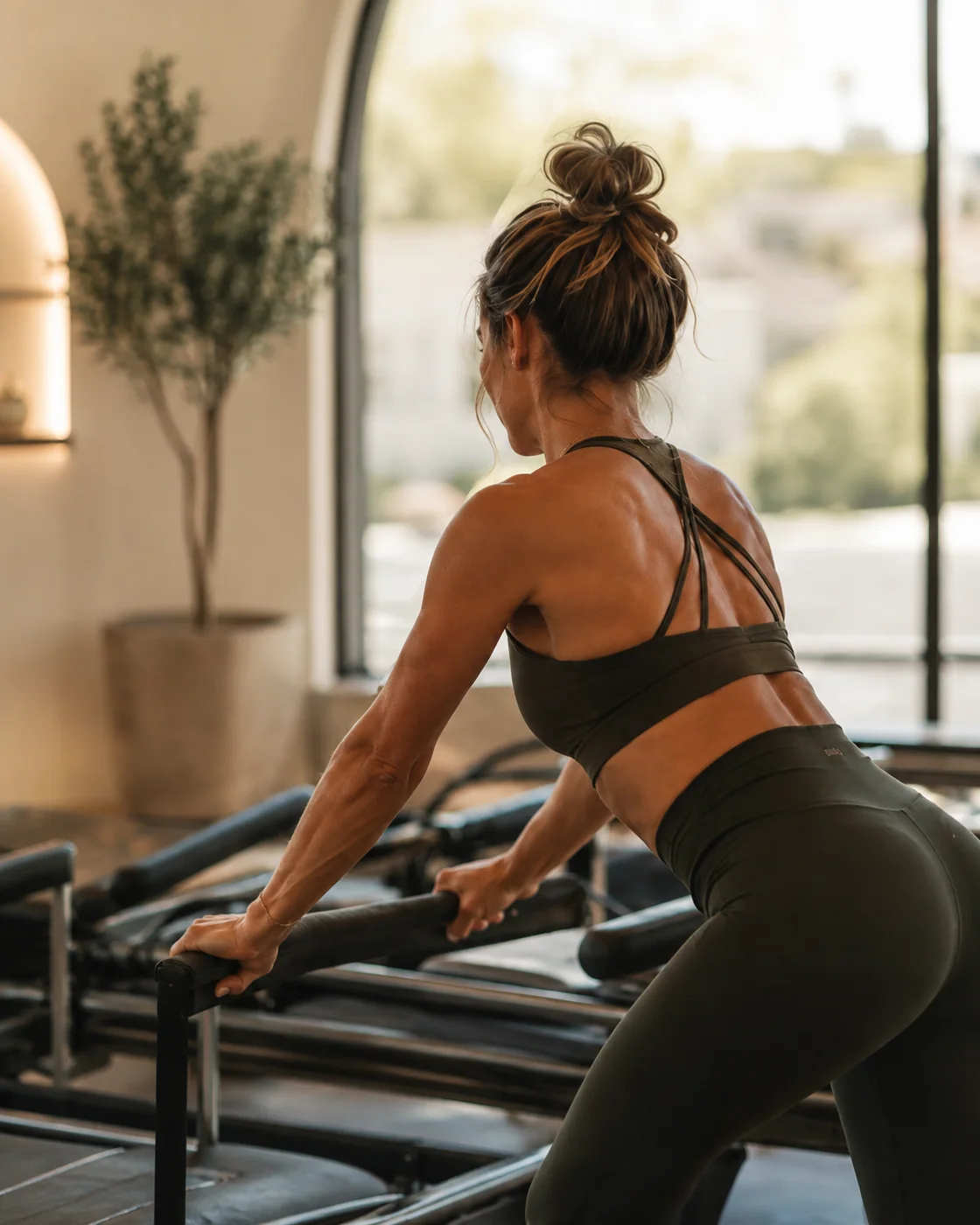
It's the question we hear most from new students: "Isn't Lagree just hard pilates?" It's a fair guess — both happen on a sprung carriage, both love slow control, and Lagree openly grew out of pilates roots. But spend one class on each and your body will file them in very different drawers. Here's the honest comparison.
The short answer
Pilates is a precision practice built around core control, alignment and mobility. Lagree is high-intensity strength training that borrows the carriage and the control — then removes the rest, raises the tension, and holds you in the burn dramatically longer. Pilates restores; Lagree floors you (kindly).
| Lagree | Reformer Pilates | |
|---|---|---|
| Goal | Muscular fatigue — strength and visible tone | Core control, alignment, mobility |
| Pace | A minute or more per exercise, no rest between reps | 8–12 controlled reps; transitions double as breathers |
| Machine | Megaformer — front and back platforms, heavier springs, handles everywhere | Reformer — lighter frame, simpler spring bar |
| Intensity | Engineered to be hard; the shake shows up on schedule | Can be demanding, but intensity isn't the point |
| After class | Lit up, worked to fatigue | Taller, unwound |
| Best for | Strength and tone without joint impact | Mobility, alignment, a gentler on-ramp |
Where they differ
Intent
Classical and reformer pilates were designed as a movement system — balanced musculature, spinal articulation, breath-led control. A good pilates class often leaves you feeling taller and unwound. Lagree's goal is muscular fatigue: work each muscle group to failure, slowly, then move to the next. You leave lit up, not unwound — that's what the recovery lounge is for.
Pace and rest
Pilates sets are usually 8–12 controlled reps with transitions that double as breathers. Lagree holds you in each exercise for a minute or more with no top or bottom rest — the transition itself is often the only pause you get.
The machines
A pilates reformer is lighter, with a simpler spring bar. The Megaformer is bigger and heavier, with front and back platforms, more spring configurations, and handles everywhere — built so that whole classes flow between exercises with tiny setup changes. Related machines, different species.
Intensity ceiling
You can absolutely make pilates hard. But Lagree is engineered to be hard — the format's slow tempo plus constant tension pushes deep muscle fibers to fatigue in a way that's difficult to replicate on a standard reformer. The famous Lagree shake shows up on schedule.
Which one is right for you?
- Choose Lagree if your goal is strength, muscle tone, and a serious low-impact workout — especially if running or lifting has been rough on your joints.
- Choose pilates if your priority is mobility, alignment, rehab-adjacent control work, or a gentler on-ramp back into movement.
- Honestly? Alternate. Lagree builds; slower practice restores. The combination is better than either alone.
At Sacred we teach Lagree on the Megaformer and heated mat work — hot pilates and hot yoga — under one roof, so you don't actually have to pick. If you're new to all of it, start with whichever sounds less intimidating and let your first two weeks decide. That's what the intro offer is for.